
What is Godavari Jal? Meaning, Significance and How to Use It at Home
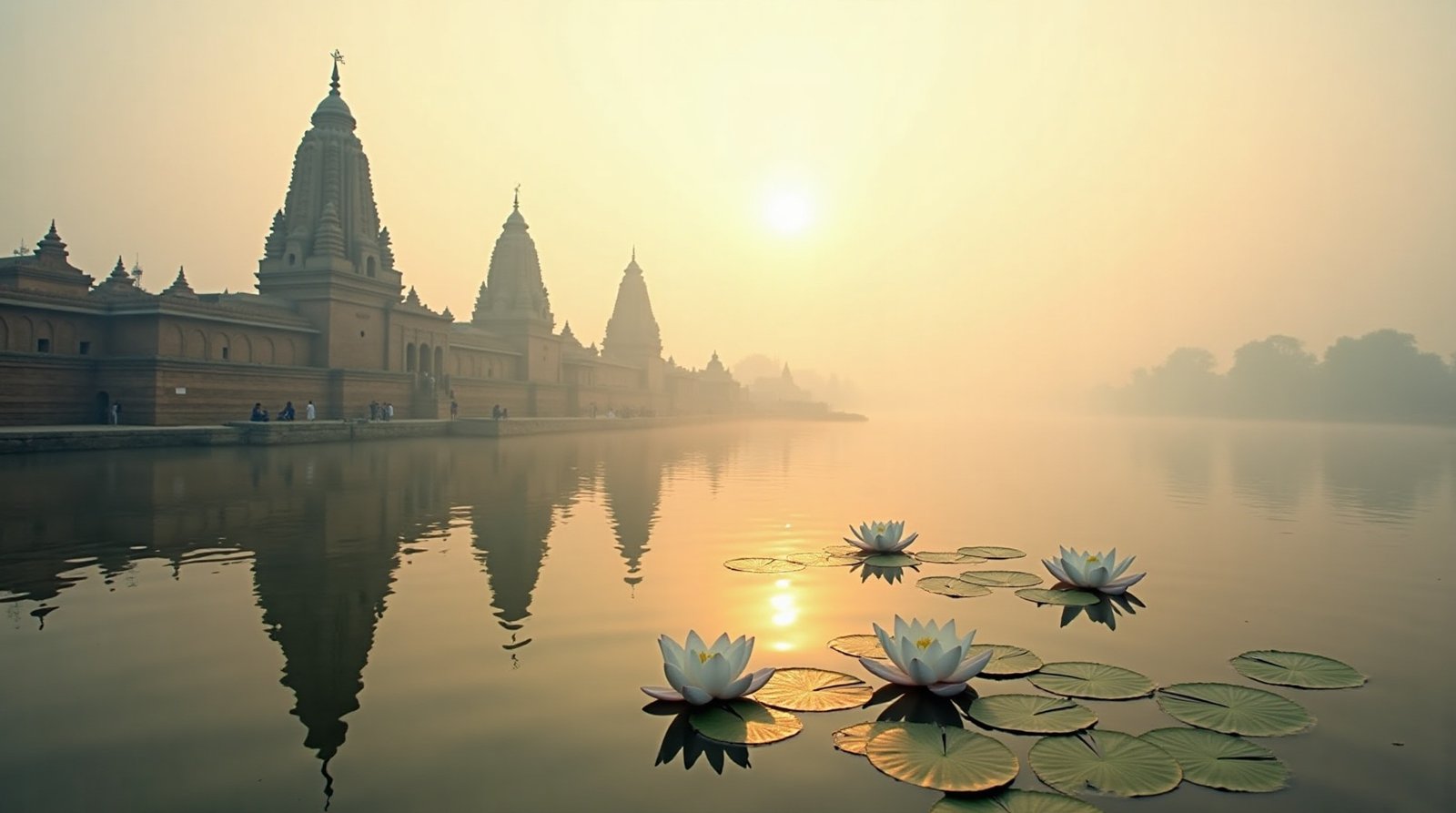
In many Hindu homes, a small bottle of sacred water sits quietly in the puja ghar, brought back from a tirtha yatra or gifted by a relative. For families in Maharashtra and across South and Central India, that water is often Godavari jal — water from the river lovingly called the Dakshin Ganga, the Ganga of the South. This article explains what Godavari jal is, why it holds such a special place in Hindu tradition, and how you can use and store it respectfully at home.
The Godavari: Dakshin Ganga of India
The Godavari is one of the longest rivers of India. It begins its journey in the Brahmagiri hills near Trimbakeshwar in the Nashik district of Maharashtra, and flows eastward across the Deccan before meeting the Bay of Bengal. For centuries, communities along its banks have depended on it for water, farming and daily life — and have honoured it as a sacred mother, much as the Ganga is honoured in the North.
This is why the Godavari is traditionally called Dakshin Ganga. According to a well-known legend, the sage Gautama Rishi performed penance to bring the Ganga down to the Brahmagiri hills, and the river that flowed forth became known as the Godavari, or Gautami Ganga. Tradition holds that bathing in the Godavari, or offering her waters in worship, carries the same punya (spiritual merit) as worship with Ganga jal itself.
Nashik and Trimbakeshwar: where the river begins
The Godavari’s origins are woven into two of Maharashtra’s most beloved tirthas.
- Trimbakeshwar is home to one of the twelve Jyotirlingas of Bhagwan Shiva. The river is believed to rise from the Brahmagiri hills here, and pilgrims gather at the Kushavarta Kund, the sacred tank traditionally regarded as the spot where the Godavari first appears.
- Nashik, a short distance downstream, is closely associated with the Ramayana. Tradition holds that Bhagwan Rama, Sita Mata and Lakshmana spent part of their vanvas (forest exile) at Panchavati on the Godavari’s banks. The Ram Kund ghat in Nashik remains one of the most visited bathing spots on the river.
The Kumbh connection
Nashik and Trimbakeshwar together form one of the four places in India where the Kumbh Mela is held — along with Prayagraj, Haridwar and Ujjain. The Nashik Kumbh, known as the Simhastha Kumbh, takes place when Guru (Jupiter) enters the sign of Simha (Leo), roughly once every twelve years. During this period, lakhs of pilgrims, sadhus and families come to bathe in the Godavari at Ram Kund and Kushavarta Kund.
It is believed that during the Kumbh, the waters of the river become especially charged with spiritual significance — which is why Godavari jal collected in connection with the Kumbh is often called Kumbh Amrit and treasured in homes for puja throughout the years that follow.
Traditional uses of sacred jal in home puja
Water is central to Hindu worship. Almost every ritual begins with it, and sacred jal from a tirtha is considered especially fitting for these purposes. Here are the most common traditional uses at home:
- Abhishek: Pouring a small quantity of sacred jal over a Shivling, shaligram or murti as an offering. This is especially cherished during Shravan, on Mondays (Somvar), and on Mahashivratri. Even a few spoonfuls, offered with devotion, are considered complete.
- Sankalp: Before beginning a vrat, puja or any auspicious undertaking, water is traditionally taken in the palm while stating one’s intention. Sacred jal is often used for this sankalp.
- Shuddhi (purification): A few drops sprinkled around the puja area, over samagri, or in the corners of the home — often with a flower, tulsi leaf or mango leaf — is a traditional way of purifying a space before worship, during griha pravesh, or before festivals.
- Kalash puja: A few drops of tirtha jal are commonly added to the kalash during Navratri sthapana, Satyanarayan puja, weddings and other samskaras.
- Festival days: On days such as Ganga Dussehra, Makar Sankranti or ekadashi, many families add a few drops of sacred jal to their bathing water as a way of symbolically bathing in the holy river at home.
How to store sacred jal at home
Sacred jal is treated not as an ordinary household item but as a form of the river herself, so it is kept with the same care as other puja articles.
- Keep it in a clean, tightly sealed bottle — glass, copper or food-grade containers are commonly preferred. Make sure the bottle has never been used for anything else.
- Give it a dedicated place in the puja ghar, ideally on a shelf or chowki rather than directly on the floor.
- Keep it away from the kitchen sink, bathroom and shoe racks, and out of reach of very young children.
- If you decant a small quantity for daily use, use a clean spoon or small lota, and reseal the main bottle promptly.
Respectful handling: do’s and don’ts
Do
- Wash your hands before handling the bottle, as you would before touching any puja item.
- Use small quantities — tradition values bhava (devotion) over volume.
- When a puja is over, pour any leftover offered water at the base of a tulsi plant, into a garden, or into a flowing body of water.
Don’t
- Do not pour sacred jal, or water used in puja, down a drain or into a dustbin.
- Do not place the bottle directly on the floor, near footwear, or in cluttered storage.
- Do not mix it with cleaning water or use it for ordinary household tasks.
- Do not drink it. This is important enough to say clearly below.
An important note: for ritual use only
Bottled sacred jal, including Kumbh Amrit, is sold and kept as a ritual item for puja use only — it is not meant for drinking. River water is not treated or purified for consumption, and honouring it through abhishek, sankalp and shuddhi is the traditional and respectful way to use it at home. Treat it as you would kumkum or chandan: an offering for worship, not a consumable.
Bringing the Godavari home
For families who cannot travel to Nashik or Trimbakeshwar, a small bottle of Godavari jal offers a simple, heartfelt connection to the Dakshin Ganga — to the ghats of Ram Kund, the Jyotirlinga of Trimbakeshwar, and the centuries of devotion carried by the river. Kept with care and used with devotion, even a few drops can make everyday puja feel like a tirtha yatra of the heart.