
How to Set Up a Simple Home Puja Ghar: A Practical Guide
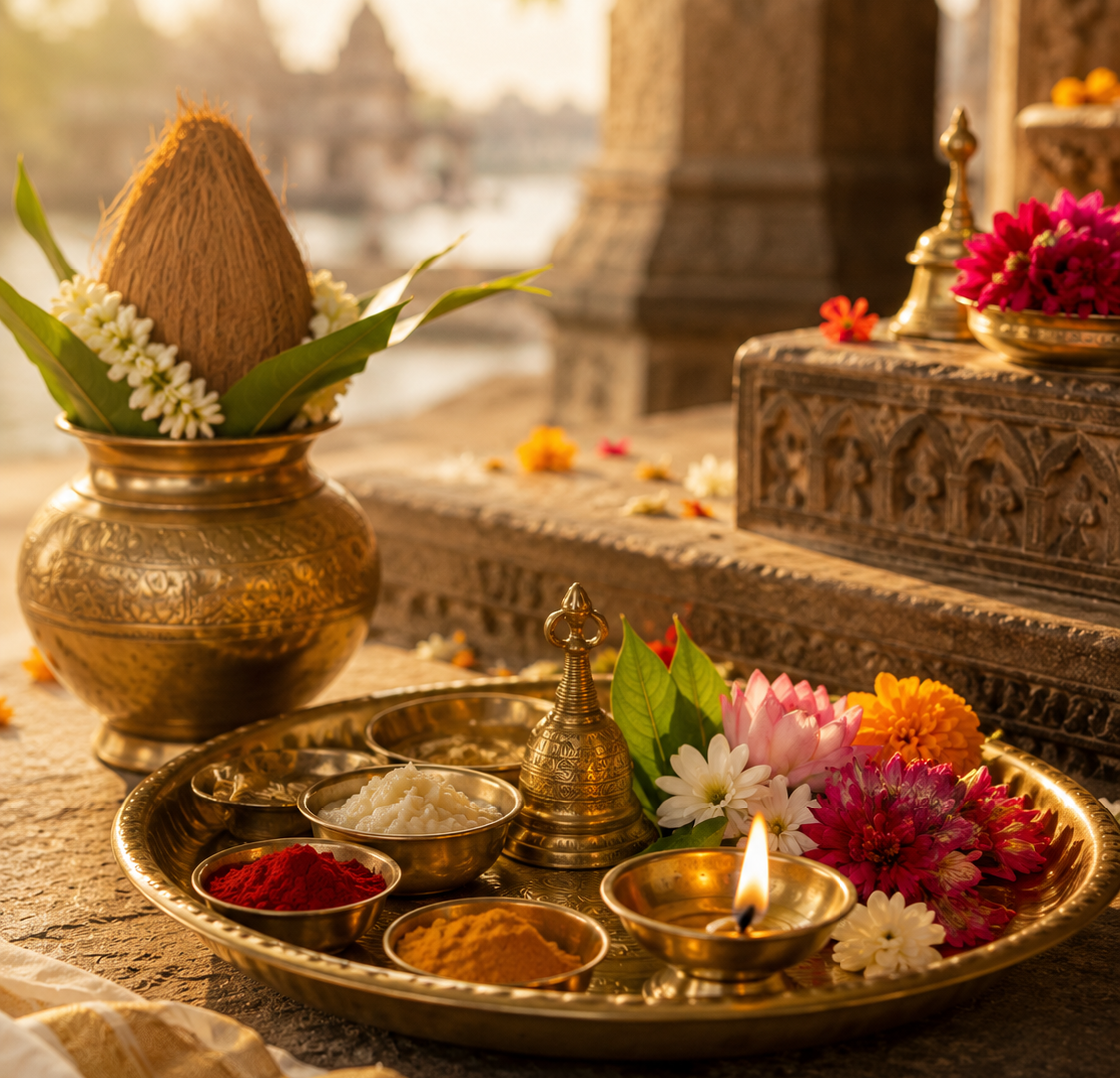
A puja ghar does not need to be large or elaborate to be meaningful. Some of the most loved mandirs in Indian homes are a single shelf with a diya, a photo of the family’s ishta devata, and a few well-kept puja items. What matters is that the space is clean, respected, and used. This guide walks you through setting up a simple home puja ghar — choosing the spot, gathering the essential samagri, building an easy daily routine, and keeping the space beautiful through the year.
Choosing the right spot
Traditionally, the north-east corner of the home — known as the Ishan kona — is considered the most auspicious direction for a puja ghar. Vastu tradition regards this corner as the direction of the devas, and many families also prefer to face east while praying, towards the rising sun. These preferences come from tradition, and if your home’s layout does not allow for them, do not worry — a clean, quiet spot kept with devotion is always suitable.
A few practical pointers most families follow:
- Choose a place that is quiet and easy to keep clean — a corner of the living room, a dedicated cabinet, or a wall-mounted mandir shelf all work well.
- Avoid placing the mandir directly against a bathroom wall, under a staircase, or next to the shoe rack, as these placements are traditionally avoided.
- If space is limited, a small wooden mandir or a single shelf at chest height is perfectly fine. Murtis and photos should not sit directly on the floor.
- Ensure some ventilation nearby, since you will be lighting a diya and agarbatti regularly.
Essential samagri: a simple checklist
You do not need everything at once. Start with the basics and add items over time.
The heart of the mandir
- Murti or framed photo of your ishta devata or kul devata — one or two well-loved images are better than a crowded shelf.
- A small chowki or clean cloth (aasan) for the murtis to rest on.
For daily worship
- Diya (brass or clay) with cotton wicks and ghee or oil.
- Agarbatti or dhoop with a stand to catch the ash.
- Kumkum, haldi and chandan for tilak and offerings.
- Akshat — a small container of unbroken rice grains.
- A small ghanti (bell), rung during aarti.
- A lota and a small spoon or panchpatra for offering water.
Special and occasional items
- Kalash — a small metal pot used during festivals such as Navratri and for pujas like Satyanarayan katha.
- Sacred jal — tirtha water such as Ganga jal or Godavari jal, kept in a clean sealed bottle for abhishek, sankalp and purification. Remember that bottled sacred jal is a ritual item for puja use only, not for drinking.
- Aarti thali, camphor (kapur), fresh flowers, and a small container for naivedya (food offering) — even a piece of mishri or a tulsi leaf is a complete offering.
- A matchbox or lighter kept nearby, reserved for the mandir.
A simple daily routine for busy families
Consistency matters more than length. A sincere ten-minute puja done daily is traditionally valued far more than an elaborate one done rarely. Here is a simple routine many households follow:
Morning (5–10 minutes)
- Bathe or at least wash your hands and face before approaching the mandir.
- Wipe the shelf, remove yesterday’s flowers, and offer fresh water in the lota.
- Light the diya and an agarbatti.
- Apply a small tilak of kumkum or chandan to the murtis or photos.
- Offer a flower or a few grains of akshat, fold your hands, and recite a short prayer, shloka or your family’s traditional mantra.
- If time allows, do a short aarti with the ghanti.
Evening (2–5 minutes)
- Light the diya again at dusk — the traditional sandhya deep — and offer a brief prayer.
- This is a lovely moment to involve children; even folding hands together for a minute builds a lifelong sanskar.
On days when the household is rushed, simply lighting the diya with a folded-hands namaskar is enough. Tradition holds that bhava — the feeling behind the act — is the true offering.
Preparing for festivals
Festivals are when the puja ghar becomes the centre of the home. A little preparation goes a long way:
- Deep-clean the mandir a day or two before major festivals such as Diwali, Navratri, Ganesh Chaturthi or Mahashivratri. Wipe the shelves, polish brass items with tamarind or a suitable cleaner, and wash the aasan cloths.
- Stock up on samagri in advance — wicks, ghee, agarbatti, camphor, kumkum and flowers tend to run out exactly when shops are busiest.
- Set up the kalash where the festival calls for it, adding a few drops of sacred jal to the water as many families traditionally do.
- Prepare a simple naivedya — it need not be elaborate; fruit, mishri or a home-made sweet offered with love is complete.
- Involve the whole family — let children make the rangoli, string the toran, or arrange the flowers. Festival preparation itself is a form of seva.
Keeping the space clean and respectful
A puja ghar stays sacred through everyday care:
- Dust and wipe the mandir daily or on alternate days, using a cloth kept only for this purpose.
- Remove nirmalya — used flowers, leaves and offerings — regularly. Traditionally these are placed at the base of a plant or under a tree rather than in the dustbin.
- Do not let the mandir become a storage shelf for keys, bills or phones.
- Keep footwear away from the puja area, and wash your hands before touching puja items.
- Handle sacred items — murtis, sacred jal, granthas like the Bhagavad Gita or Ramayana — with clean hands and both hands where possible.
- Never leave a burning diya unattended; place it on a steady, heat-safe surface away from curtains.
Start small, stay regular
The most important step is simply to begin. Choose your corner, place your ishta devata’s image with love, light one diya today — and let the space grow with your family. Over months and years, a simple shelf becomes the emotional heart of the home: the place where the day begins, festivals bloom, and children learn, by watching, what devotion looks like.